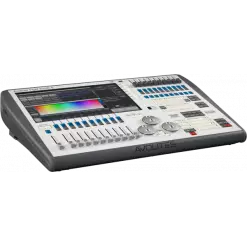
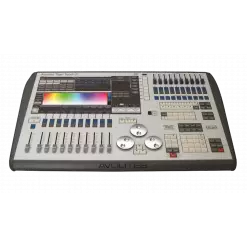
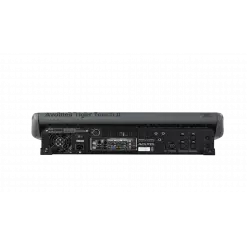
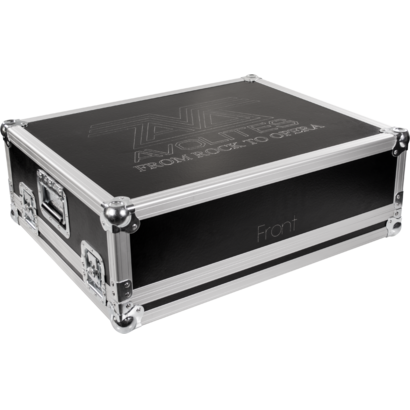
Now boasting a 100% brighter screen, increased processing power, and faster graphics engine, the Tiger Touch II is the most specified Titan console.
The Avolites Tiger Touch II represents the perfect combination of power and portability. This third-generation console is packed with enough power for complex shows, yet small and light enough to fly in standard hold luggage. The console features SMPTE timecode support and a redesigned button layout to match the entire Titan range.
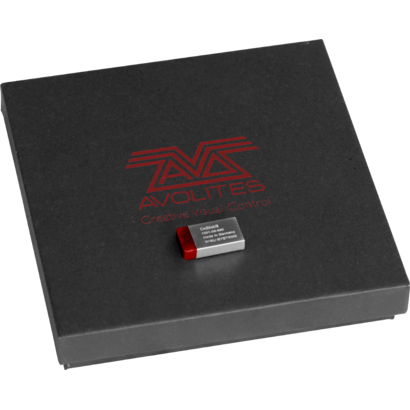
In order to update the console to version 12 of the Titan, it will be necessary to purchase and install a USB dongle called AVOKEY.
Serial 02006 - 03065
You need to order:
- AVOKEYINT
- 1x5 way to USB-A Cable (spare part code 8000-6102)
Once you've received your AVOKEYINT and 1x5 way to USB-A Cable, you will be required to connect the USB-A Cable to the motherboard. This cable will provide an additional USB port for the AvoKey.
Click here to view the installation guide: https://www.avolites.com/Portals/0/Downloads/Manuals/AvoKey/8000-6102 TT2-2-3K AVOKEY upgrade with 1808-0028.pdf
Serial 03066 - 4020
You need to order only AVOKEYINT
Once you've received your AVOKEYINT, you will be required to connect this directly to the available (Blue) USB port inside the console (on the motherboard).
Click here to view the installation guide: https://www.avolites.com/Portals/0/Downloads/Manuals/AvoKey/8000-6101 TT2 AVOKEY no cable.pdf
Serial 04021 - 05001
You need to order only AVOKEYINT
Once you've received your AVOKEYINT, you will be required to connect this directly to the available (Red) USB port inside the console (on the motherboard).
Serial 5001 and above include a factory fitted AvoKey.
Therefore, you do not need to purchase an AvoKey. MUJHE O SANAM BAS TERA YE PYAAR CHAHIYE
Introduction: More Than Just a Lyric In the vast ocean of Hindi and Urdu love songs, certain phrases transcend their musical origins to become life mottos. One such powerful declaration is "Mujhe O Sanam Bas Tera Ye Pyaar Chahiye." Translated from Hindi/Urdu, this heart-wrenching line means: "O my beloved, I only need your love."
"O my dear, nothing else. Just your love. Just this love. That is all I need."
While these exact words have appeared in various renditions, remixes, and poetic recitations over the years, the phrase has taken on a life of its own. It is no longer just a lyric; it is a philosophy. It represents the pinnacle of romantic idealism—where material wealth, social status, and even survival needs take a backseat to the singular desire for a lover’s affection.
| Situation | How to use it | | :--- | :--- | | | Start with: "I have listed everything I want in life. The list has one item only: Mujhe o sanam bas tera ye pyaar chahiye ." | | Proposing to your partner | Whisper it after a long silence. It works best when you are looking at the stars or a candle flame. | | Caption for a romantic photo | Use it with a picture where you are both laughing or crying together. Do not use it with a posed, fake-smile photo. | | Singing at a karaoke night | Choose the slow, unplugged version. Hold the microphone, close your eyes, and sing the line twice—once for yourself, once for them. |
So the next time you hear that track drop at a party, or you see it written in a comment section, pause for a second. Let the weight of those six words sink in. And if you are lucky enough to have found that love—hold onto it. Because that, truly, is everything. Do you have your own story about this song or lyric? Share it in the comments below. And if this article spoke to your heart, share it with your "Sanam."
However, the emotional core of the line is borrowed from the golden era of Hindi film music—specifically the works of and Sahir Ludhianvi . The modern "Bas tera pyaar chahiye" sentiment echoes the 1970s classic "Tere Bina Zindagi Se Koi Shikwa" (Without you, I have no complaint from life) and "Mere Dushman Tu Meri Dua" .
Introduction: More Than Just a Lyric In the vast ocean of Hindi and Urdu love songs, certain phrases transcend their musical origins to become life mottos. One such powerful declaration is "Mujhe O Sanam Bas Tera Ye Pyaar Chahiye." Translated from Hindi/Urdu, this heart-wrenching line means: "O my beloved, I only need your love."
"O my dear, nothing else. Just your love. Just this love. That is all I need."
While these exact words have appeared in various renditions, remixes, and poetic recitations over the years, the phrase has taken on a life of its own. It is no longer just a lyric; it is a philosophy. It represents the pinnacle of romantic idealism—where material wealth, social status, and even survival needs take a backseat to the singular desire for a lover’s affection.
| Situation | How to use it | | :--- | :--- | | | Start with: "I have listed everything I want in life. The list has one item only: Mujhe o sanam bas tera ye pyaar chahiye ." | | Proposing to your partner | Whisper it after a long silence. It works best when you are looking at the stars or a candle flame. | | Caption for a romantic photo | Use it with a picture where you are both laughing or crying together. Do not use it with a posed, fake-smile photo. | | Singing at a karaoke night | Choose the slow, unplugged version. Hold the microphone, close your eyes, and sing the line twice—once for yourself, once for them. |
So the next time you hear that track drop at a party, or you see it written in a comment section, pause for a second. Let the weight of those six words sink in. And if you are lucky enough to have found that love—hold onto it. Because that, truly, is everything. Do you have your own story about this song or lyric? Share it in the comments below. And if this article spoke to your heart, share it with your "Sanam."
However, the emotional core of the line is borrowed from the golden era of Hindi film music—specifically the works of and Sahir Ludhianvi . The modern "Bas tera pyaar chahiye" sentiment echoes the 1970s classic "Tere Bina Zindagi Se Koi Shikwa" (Without you, I have no complaint from life) and "Mere Dushman Tu Meri Dua" .